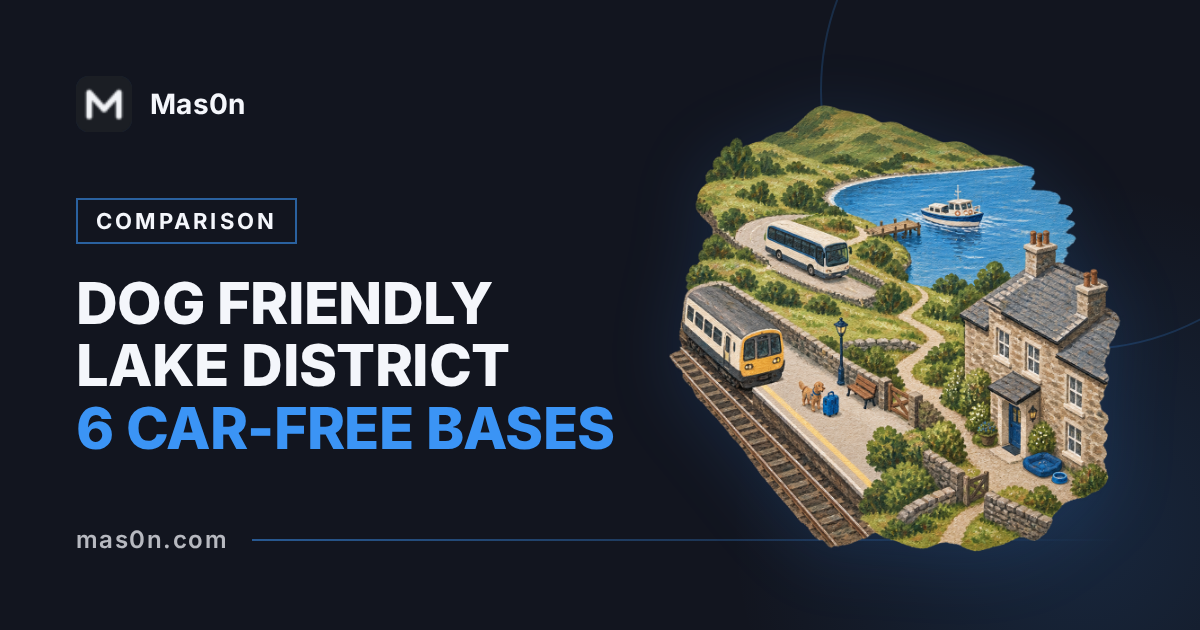
The train from Oxenholme to Windermere takes about 20 minutes, and a dog can ride it for nothing. That single branch line is the reason the search for dog friendly hotels in the Lake District quietly splits into two different trips: one where you step off a train and walk to the front door with the lead in your hand, and one where you still need a car to get anywhere near the hotel, let alone a walk.
Every round-up on page one will tell you which hotels take dogs. Almost none tell you how you and the dog get there, what happens when the 555 is full, or whether the walk from the door is worth doing. That is the part that decides the holiday, so that is what this is about: six bases compared by how well they work with a dog and no car.
What makes a dog friendly hotel in the Lake District actually work
There is a real difference between dog-tolerated and dog-integrated, and the booking page rarely spells it out. Dog-tolerated means dogs in the bedroom, dogs out the back, dogs nowhere near food. Dog-integrated means the dog comes into the bar and sits under the table while you eat dinner properly, at the same time, as one party.
That distinction costs more than the dog fee does. If the dog cannot come to dinner and cannot be left in the room, you are eating in shifts or paying for room service for three nights. A hotel that charges nothing for the dog and bars dogs from every dining area is usually the expensive option.
Facilities matter less than people think. A dog bed and a biscuit on arrival are pleasant. A hard-floored ground-floor room, a boot room with a hose or tap, somewhere to hang a soaked coat, and a small enclosed patch of outside space at 6am are what you actually use. Ask for hard floors specifically; carpeted rooms are where damage charges come from.
Then there is location, which beats facilities every time for car-free guests. If every walk the hotel recommends starts with a drive to a trailhead, the hotel is dog friendly and the location is not. Lake District car parks at the popular starts fill early in summer, and if you have no car you cannot reach them at all. What you need is an hour of decent walking that begins at the front door.
Four questions worth asking before you pay a deposit, by email so you have it in writing:
- Can the dog be left alone in the room, and if so for how long?
- Which rooms are dog rooms, and are they ground floor with hard floors?
- Where exactly can the dog go: bar, lounge, breakfast room, restaurant?
- Is the dog charge per dog per night or flat for the stay, and is there a damage deposit?
I have set out the wider cost and rules picture in more detail in this guide to dog friendly Lake District hotels, costs and rules. The rest of this piece is the logistics layer on top.
Three dog friendly bases on the Windermere branch line
The Windermere branch from Oxenholme is the only railway running into the central Lakes. Everything else is bus. That one fact explains why these three bases dominate genuinely car-free dog stays.
1. Windermere town: the easiest arrival
You get off the branch train and you are in the town. Most of the dog friendly hotels and guest houses here are a five to fifteen minute walk from the platform, which matters when you are carrying bags and managing a lead at the same time.
The walk from the door is Orrest Head, Wainwright’s first fell and roughly 20 to 30 minutes up from the main road opposite the station. It is a short climb with a proper view at the top and it works as an early-morning dog walk before breakfast. There is a Booths supermarket by the station for dog food you forgot to pack.
Downside: Windermere town is not on the lake. The shoreline is a mile or so downhill at Bowness, which is fine going and less fine coming back in rain.
2. Bowness: lake access, and the crowds that come with it
Bowness gives you the piers, the launches and the water. It also gives you a promenade that in August is dense with people, ice cream, geese and other dogs on short leads. For a confident dog that is entertainment. For a nervous or reactive dog it is a miserable twenty minutes every time you want to get out.
If your dog is reactive, book Windermere or Ambleside instead and visit Bowness by boat on a quiet morning. The good news is that a launch across to Ferry House and the footpaths on the quieter west shore gets you away from the crush quickly.
3. Ambleside: best walking from the door
No railway station, but Ambleside is straightforward to reach: the 555 bus from Windermere station, or a Windermere Lake Cruises sailing to Waterhead and a fifteen minute walk into town. Bags on the bus are easy. Bags plus dog plus a full bus at 4pm on a wet Saturday is less easy.
For dog walking, Ambleside is the strongest of the three. Rothay Park sits at the edge of town, Stock Ghyll Force is a short wooded climb straight from the centre, and the valley paths towards Rydal and along the River Rothay give you flat hour-long loops that do not need a car or a bus. Evening food choice with dogs is also good; several pubs here take dogs in the bar as standard.
Ranked on the things that decide a dog trip: for arrival with bags, Windermere wins. For walking from the door, Ambleside. For lake access, Bowness. For evening quiet, Ambleside again, with Windermere close behind. Bowness is the noisiest of the three and the hardest with a dog that dislikes crowds.
Three bases beyond the branch line: Keswick, Ullswater and the coast
4. Keswick: Penrith, then a bus
Keswick has no railway. You come in on the West Coast Main Line to Penrith, then take the X4, X5 or 555 bus, roughly 45 minutes over to Keswick. Check that timetable before you book the hotel, not after, and look at the last departure on your arrival day. Delays on the main line are the single most common way a car-free Keswick trip goes wrong.
Once you are there it is the best dog base in the national park. The Derwentwater shoreline paths start a ten minute walk from the town centre at Friar’s Crag, and Latrigg goes up from Spooney Green Lane, on foot, from town. In three days the dog never needs to sit in a vehicle again. That is rare.
5. Glenridding and Patterdale for Ullswater
Bus from Penrith down the lake to Glenridding and Patterdale, with the Ullswater Steamers running between Glenridding, Howtown and Pooley Bridge. Dogs are carried on the steamers for a small charge; confirm the current fee and any summer restrictions when you book.
The Ullswater Way is the reason to come. It is a circular route around the lake, about 20 miles, and the point is that you do not have to walk it in one go. Boat out to Howtown, walk the shoreline path back to Glenridding, roughly seven miles of low-level walking with the lake beside you the whole way. In spring, that section is a far better choice with a dog than an open fell route, because lead rules on the fells are tighter than most people realise.
6. Grange-over-Sands: quieter, cheaper, and on a proper railway
Grange sits on the Furness line, so you arrive by train with no bus connection at all. Dog friendly rooms here tend to be cheaper than in Bowness, the promenade gives you a flat traffic-free walk straight from the town, and Hampsfell rises behind for something with a view. Cartmel is a walkable few miles away.
Be honest with yourself about the gaps. You are on the edge of the national park, not in the middle of it, and reaching Windermere means a train back to Arnside or Lancaster and round, or a bus. Do not walk out onto the sands of Morecambe Bay with a dog. The channels and quicksand are genuinely dangerous and guided crossings exist for a reason.
Wet days are where itineraries collapse. Keswick copes best: covered market, the Pencil Museum, dog friendly pubs, and shoreline paths that stay walkable in rain. Ambleside and Grange both have enough indoor options within walking distance. Glenridding and Patterdale have very little, so a full day of rain there means a long afternoon in the room with a damp dog.
Dogs on trains, buses and lake boats
Rail is the easy part. Under the National Rail Conditions of Travel, dogs travel free on UK train operators, normally up to two per passenger, on a lead or in a carrier, and not occupying a seat. Free travel comes with no space allocation, though, which is the catch. A change at Oxenholme in the Friday evening rush, with a case in one hand and an anxious dog in the other, is harder than the fare suggests. A quieter mid-morning advance ticket solves more problems than any piece of kit you can buy, and advance fares are usually cheaper anyway. If you want to reduce the fare properly, the mechanics are covered in my notes on buying UK rail tickets for less.
Buses are the fragile link. Dogs on Stagecoach Cumbria services, including the 555 and the 599 open-top, are carried at the driver’s discretion rather than as a right. Usually it is fine. On a packed summer afternoon with a buggy already in the aisle, it may not be. Never build a plan where a single departure is the only way back for your dinner booking. Have a later bus, a walkable return leg, or a taxi number saved.
Launches and steamers on Windermere and Ullswater generally welcome dogs, often for a small fee per dog. Take the outdoor deck in summer and think about shade, because a metal deck in full sun is hot underfoot and there is nowhere to hide on a busy sailing.
Last mile: pre-book a taxi from Penrith or Windermere and say on the phone that you have a dog. Turning up at a rank and hoping is how people end up walking two miles in the dark.
What a dog friendly stay really costs on top of the room
Dog supplements in the Lake District are charged either per dog per night or as a flat amount for the whole stay. Some places charge nothing and restrict dogs to the bedroom instead. Rates vary property by property, so check the current figure and confirm the exact structure at booking, because a per-night rate across two or three nights can come to far more than a single flat fee for the same dog.
Read the terms for the rest of it: second-dog surcharges, refundable damage deposits, and cleaning charges if the room needs more than a normal turnaround. These appear in the small print rather than on the room page.
A realistic three-night budget line for two adults and one dog, based in Windermere, has five parts:
- Room for three nights, dog friendly, booked direct.
- Dog supplement, at the rate the hotel confirms in writing.
- Two advance rail singles each, priced on the day you book rather than guessed, with a railcard applied if you hold one.
- A Stagecoach day rider for the days you use the 555 or 599, which beats repeated singles once you make three journeys.
- One lake sailing, plus the dog fee on board.
Price those five lines yourself with current fares and you will have a number you can trust. For a fuller worked example of how the travel side adds up, see my four-day car-free Lake District plan and budget.
Booking order that prevents the usual mistakes
Book in this order. Advance rail tickets and the hotel first, because in school holidays both are the constrained items and the itinerary is not. Confirm the dog policy in writing, dining arrangements included, before any non-refundable deposit leaves your account. Then plan walks around the bus and launch timetables rather than the other way round, and check the last departure on your arrival day specifically.
Three things stay genuinely hard. Hot days with no shade on a boat deck. Lambing season on the fells, where under the Countryside and Rights of Way Act dogs must be on a short lead on open access land between 1 March and 31 July, and near livestock at any time, which is exactly why a lakeside section of the Ullswater Way beats an open fell in April; the Countryside Code on GOV.UK sets out the rest. And long evenings, if your dog cannot be left alone and the bar will not take dogs.
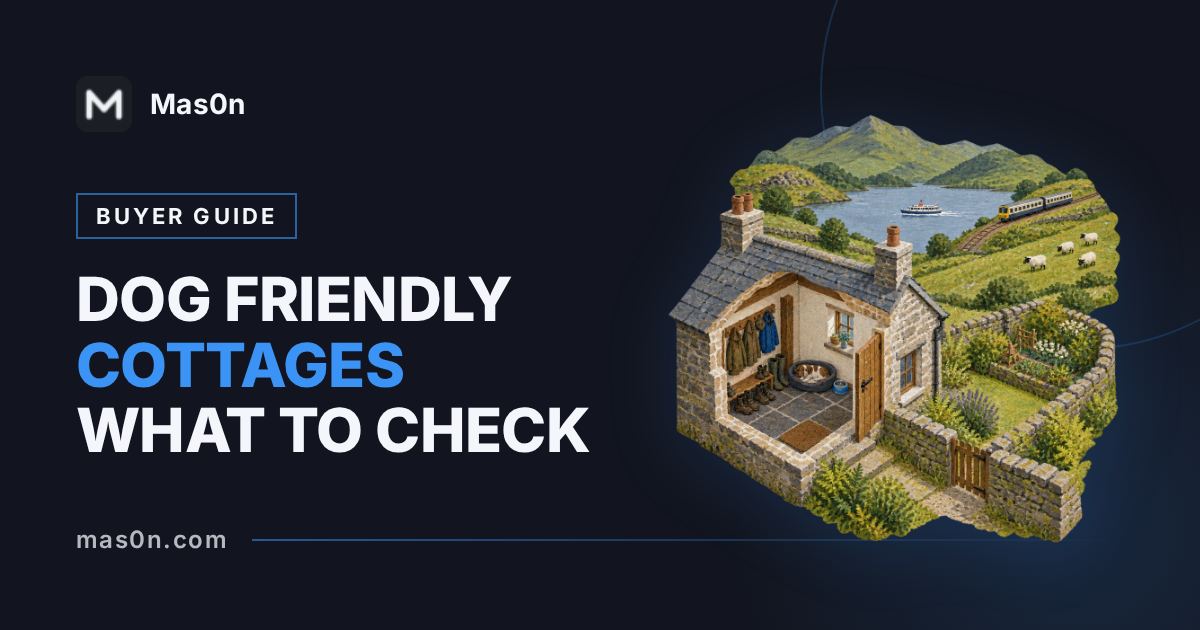
If that last one applies to you, a self-catering place may suit you better than any hotel, and I have written separately about what to check in dog friendly Lake District cottages. Before you finalise anything, it is also worth reading the mistakes people make on a car-free Lakes trip, because most of them cost money rather than just time.
Frequently Asked Questions
Which Lake District bases have dog friendly hotels you can reach by train?
Windermere is the only central Lakes town with its own station, on the branch line from Oxenholme. Bowness and Ambleside are then a short bus, walk or launch away. Grange-over-Sands is directly served on the Furness line, while Keswick and Ullswater need a bus from Penrith.
Do dogs travel free on trains to the Lake District?
Yes. Under the National Rail Conditions of Travel, dogs travel free on UK train operators, normally up to two per passenger, kept on a lead or in a carrier and not occupying a seat. There is no ticket to buy and no reserved floor space either, so a quieter off-peak train is worth choosing.
How much do dog friendly hotels in the Lake District charge per dog?
Some charge per dog per night, some a flat fee for the stay, and a few nothing at all, with the amount varying widely between properties, so check the current rate on the booking page. Second dogs often cost extra and damage deposits appear in the terms. Confirm the structure in writing before you pay.
Can you take a dog on Lake District buses and lake cruises?
Dogs are carried on Stagecoach Cumbria buses at the driver’s discretion rather than by right, so keep a fallback departure in mind. Windermere Lake Cruises and Ullswater Steamers generally accept dogs, often for a small fee, with open deck space the better choice in warm weather.
Can you leave a dog alone in a Lake District hotel room?
Many hotels say no, some allow it for a short period, and a few permit it only in a crate. The policy varies property by property, so ask before booking and get the answer by email. If your dog cannot be left, prioritise somewhere that takes dogs in the bar or restaurant.