A dog friendly cottage in the Lake District will make or break the week, and the deciding factor is almost never the view. It is the floor by the back door, whether there is somewhere warm to hang a soaked dog towel, and whether the “enclosed garden”in the listing is actually enclosed. Every agency site will sell you the scenery. None of them will tell you how to read their own listings critically.
So that is what this is. What the wording means, what the dog charges really add up to, and which valleys suit which dogs. Including the bits I got wrong.
What does ‘dog friendly’ actually mean on a Lakeland listing?
The filter on every big cottage site is a single tick box. In practice you meet three very different things behind it.
Dogs tolerated. The owner allows dogs because it fills weeks in November. Carpet in the sitting room, a front door that opens straight onto the lounge, no outside tap, no utility. Fine for a dry weekend with a short-haired dog. Grim in rain.
Genuinely welcomed. Slate or tiled floors downstairs, a towel rail or radiator you are allowed to drape wet kit over, bowls, an outdoor tap, sometimes a boot room. This is the middle tier and it covers most of what you actually want.
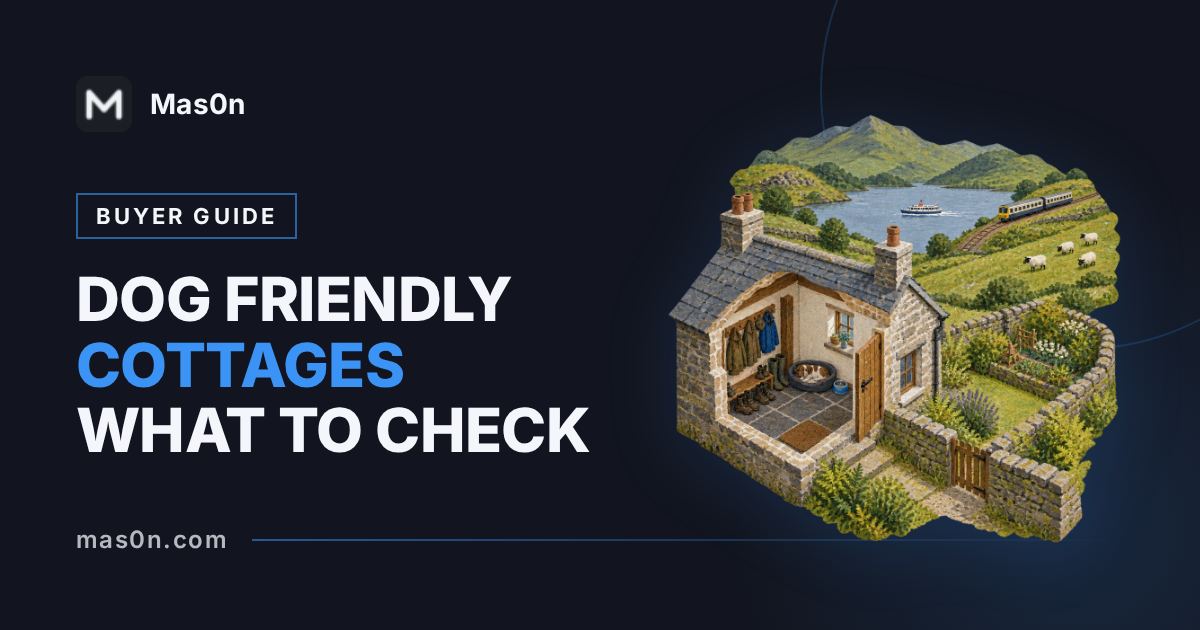
Dog-led. Properly enclosed garden, a downstairs door straight out to it, a boot room with a drying rail, occasionally a dog shower with a hose and warm water. Rare, booked early, worth paying for if you own a spaniel.
Judge the flooring, the drying space and the position of the back door before you judge a single photograph of Skiddaw. Wet dogs are a logistics problem, not an aesthetic one.
Why ‘enclosed garden’ is the most overclaimed phrase in Cumbria
Dry stone walls are beautiful and they are full of gaps. Stock fencing keeps sheep in, not terriers. I have stayed at cottages advertised with an enclosed garden where the boundary was a three-bar gate onto a lane used by farm traffic, and another where the “garden”was a shared yard with a cattle grid at the end of it. Both were described with the same two words.
Before you pay a deposit, email the owner and ask four things: how high is the boundary at its lowest point, what type of latch is on the gate, is the garden shared with other units or the owner’s house, and what does the boundary border (lane, field with sheep, beck, open fell). An owner who knows their property answers in a paragraph. An agency call centre says “I’ll check with the owner”, which is also useful information.
The clauses worth reading twice
Standard terms on Cumbrian lets tend to include some combination of: dogs must not be left unattended in the property, no dogs upstairs or on beds, no dogs on furniture, dogs must be treated for fleas and worms, and an additional cleaning charge if the place is left hairy or muddy. The unattended clause is the one that catches people out, because it rules out the long lunch in Ambleside and the afternoon at a National Trust house with an indoor-only rule. Check it, then plan around it.
What does taking the dog really cost?
Dog supplements in the Lakes are charged inconsistently, which is the single most useful thing to know. Some agencies charge per dog per stay. Some charge per dog per week regardless of how many nights you book. Owner-managed lets often roll it into the headline price and charge nothing extra. The amounts I keep seeing vary widely, with weekly figures higher than short-break ones, but check the specific listing because the structure varies more than the amount.
The consequence: a three-night break can carry exactly the same dog charge as seven nights. That quietly pushes the maths towards either a full week in the cottage or a couple of nights at a dog friendly Lake District hotel or inn instead, where the per-night dog fee is usually smaller and there is no end-of-stay clean.
“Up to 2 dogs”is a hard cap on most properties, not an opening offer. Third dogs are refused far more often than they are priced. If you have three, filter for it at the start rather than asking nicely later.
A worked example, because headline rates lie
Take two cottages, both advertised at around the same nightly rate, both sleeping four, both near Keswick. The comparison below is illustrative, but the shape of the problem is real.
- Cottage A: the slightly higher nightly rate for seven nights, dog charge levied per dog per stay for two dogs, refundable deposit, parking space at the property.
- Cottage B: the slightly lower nightly rate for seven nights, dog charge levied per dog per week for two dogs, a higher cleaning deposit held against pet damage, and no parking, so you are in a Keswick pay-and-display or a permit for the week.
Cottage B is cheaper per night and dearer by the end of Saturday, once the dog charges, the parking and a groom for two filthy dogs on the way home are in. Add the extras people forget: a per-dog fare on the Windermere or Ullswater boats, paid parking at Bowness and most popular trailheads, and the tenner you will spend on a new towel because you underpacked. Total the week, not the night.
How do you match the valley to your dog?
This is where a dog friendly cottage earns its keep. The right base means doorstep walks in the rain and no driving with a wet dog in the boot.
Keswick and Braithwaite. Best all-round choice. The old railway path east out of Keswick is flat, largely traffic-free and mostly livestock-free, the Derwentwater shoreline gives you a gentle out-and-back, and Whinlatter’s forest tracks are a short drive or a bus ride for a full day on wide, quiet ground. Braithwaite is quieter and you are onto Whinlatter from the door.
Grasmere and Elterwater. Good for short-legged and older dogs. Loughrigg Terrace, the Elterwater and Skelwith Bridge circuit, the river paths. Plenty of low, walkable mileage that does not involve a 600m climb.
Eskdale, Wasdale, Ennerdale. Quiet, sheep-heavy, and you will need a car. Lovely if your dog is calm on the lead for long stretches and you do not mind single-track roads.
Bowness and Windermere. The most dog-tolerant cafes and the worst crowds and traffic. Good for a first trip with a nervous owner, less good for a dog who dislikes pushchairs, coaches and ice cream queues.
Grizedale. Forest tracks, a decent day out, and far fewer sheep than the open fells.
Sheep country means the lead, and that changes the holiday
The Countryside Code is blunt about keeping dogs under effective control near livestock, and on open access land under the Countryside and Rights of Way Act 2000 dogs must be kept on a lead of no more than two metres near livestock at any time of year, and between 1 March and 31 July to protect ground-nesting birds. Some access land carries additional dog restrictions during lambing. So if your dog only gets proper exercise off-lead, expect them to get less running here than you imagine, especially in spring.
Use a five to ten metre long line rather than a flexi lead on the fells. A flexi tangles on bracken and stone, and the brake fails at exactly the wrong moment. A long line clipped to a harness gives the dog scope and gives you a rope you can actually hold.
For older or smaller dogs, be honest about the gaps in their fitness. Stile-heavy paths mean lifting them repeatedly, which is fine for 12kg and not for 35kg. Anything with a scramble section, Jack’s Rake, the Striding Edge crest, most of the Wasdale ridges, is out with a dog full stop.
Cottage or dog friendly hotel?
Self-catering wins for a week. You never leave the dog alone, you get drying space and a washing machine, meals happen when your dog is settled rather than when the kitchen closes, and for two dogs over seven nights it is usually cheaper.
An inn or dog friendly hotel wins for two or three nights. No cleaning at the end, no dog supplement stacked as a per-week charge, and an evening meal with the dog under the table instead of a kitchen you have to cook in. I have paid more per night and still come out ahead on a long weekend.
The hybrid works well: cottage for the week, then two evenings in dog-welcoming pubs. Ring the pub first. “Dog friendly”on a website often means the bar and the flagged area, not the restaurant, and on a wet Saturday the four dog tables go by seven o’clock.
Can you do it without a car?
More easily than most people assume, with one catch. Dogs travel free on UK trains, up to two per passenger under the National Rail Conditions of Travel, so the rail route costs you nothing extra for the dog. West Coast Main Line to Oxenholme, branch line to Windermere, then the 555 north for Ambleside and Grasmere. Or Penrith, and the X4/X5 corridor west to Keswick for Derwentwater and the railway path. Both work. I have done the Penrith run with luggage and a dog and it is genuinely fine.
The catch is the last mile. A cottage more than about fifteen minutes’ walk from a 555 or 505 stop turns every arrival and every shopping run into a job. With a dog, a rucksack and a bag of food, that walk feels twice as long in rain. Check the stop distance on a map before you book, not the agency’s “close to bus routes”.
Boats add useful one-way legs. Windermere Lake Cruises and Ullswater Steamers both carry dogs, usually for a small per-dog fare, so you can walk the shoreline one way and sail back. Check current dog fares and whether the sailing you want is running, because winter timetables thin out.
Booking order matters more than bargain hunting. Fix the cottage, get the dog limit confirmed in writing, then buy advance rail tickets against those dates. Do it the other way round and you either pay flexible fares or lose an advance ticket when the cottage dates move. If you are building the whole trip around timetables, the four-day car-free plan with real costs and the list of car-free mistakes worth avoiding will save you an afternoon of guesswork.
A car still wins for Eskdale, Wasdale, Ennerdale and most isolated farm conversions. Do not fight it.
A booking checklist that stops the usual mistakes
Order of operations: pick your dates, confirm the dog number and any restrictions in writing, book travel, then research attractions and pubs that will take the dog. If you are still weighing up bases, the comparison of where to stay in the Lake District covers the trade-offs by village.
Nine red flags you can scan a listing for in two minutes:
- “Enclosed garden”with no photograph showing the boundary or gate.
- No mention of flooring anywhere in the description.
- No drying room, utility, boot room or outdoor tap.
- Dog charge shown as “on request”rather than a figure.
- “Up to two dogs by arrangement”with nobody willing to confirm it in writing.
- Every photo taken in June sun, and none of the back door or entrance.
- “No dogs on furniture”in a cottage whose only seating is a pale fabric sofa.
- Access via a shared drive or a gate straight onto a lane, sold as “quiet roadside”.
- “Five minutes from the fells”with no named walk, which often means five minutes to a field of sheep.
Pack what the cottage will not supply: your dog’s own bedding, two or three old towels, a long line, a tick remover (Cumbrian bracken is full of them from spring onwards), and a crate if your dog settles better in one. Some owners stock towels and bowls. Assume they do not.
One honest expectation reset. A rainy week with a soaked dog in a cottage with light carpets and no drying space is miserable, and the view from the window does not fix it. That is the whole argument for spending twenty minutes reading a listing properly. Get the flooring, the drying space, the garden boundary and the bus stop distance right, and dog friendly cottages in the Lake District are about as good as a UK holiday gets. Get them wrong and you will spend the week mopping.
Frequently Asked Questions
How much do dog friendly cottages in the Lake District charge per dog?
It varies by structure more than by amount. Some agencies charge per dog per stay, some per dog per week, and owner-managed lets often include it in the price. Short breaks are frequently charged the same dog supplement as a full week, so check the exact wording on the listing before you compare two properties.
What does ‘enclosed garden’ actually mean in a Lake District cottage listing?
Often less than you hope. Dry stone walls with gaps, low stock fencing, a gate onto a lane and a shared yard are all described the same way. Ask the owner for the lowest boundary height, the gate latch type, whether the garden is shared and what it borders.
Can I leave my dog alone in a holiday cottage?
Usually not. Most Cumbrian lets include a clause saying dogs must not be left unattended in the property, and it is one of the terms owners actually enforce. Plan days where the dog comes with you, or book somewhere that explicitly permits crated dogs for short periods.
Which Lake District bases are best for dog owners without a car?
Keswick, Ambleside and Grasmere, because all three sit on frequent bus corridors and have low-level walks from the door. Keswick is the strongest choice thanks to the old railway path and the Derwentwater shoreline. Pick a cottage within about fifteen minutes’ walk of a stop.
Do dogs travel free on trains and boats in the Lake District?
Dogs travel free on UK trains, up to two per passenger under the National Rail Conditions of Travel, so the Windermere branch line and the main line to Oxenholme or Penrith cost you nothing extra. Boats are different: Windermere Lake Cruises and Ullswater Steamers carry dogs but usually charge a small per-dog fare, so check current prices and timetables before you plan a one-way walk.